The World Bank-funded Bwanali Solar-Powered Water Supply System in Dedza provides clean water to over 350 households, drastically improving community health, safety, daily productivity, and local climate resilience.
The new solar water system brings clean, reliable water and improved health to 350 Dedza households.
DEDZA..
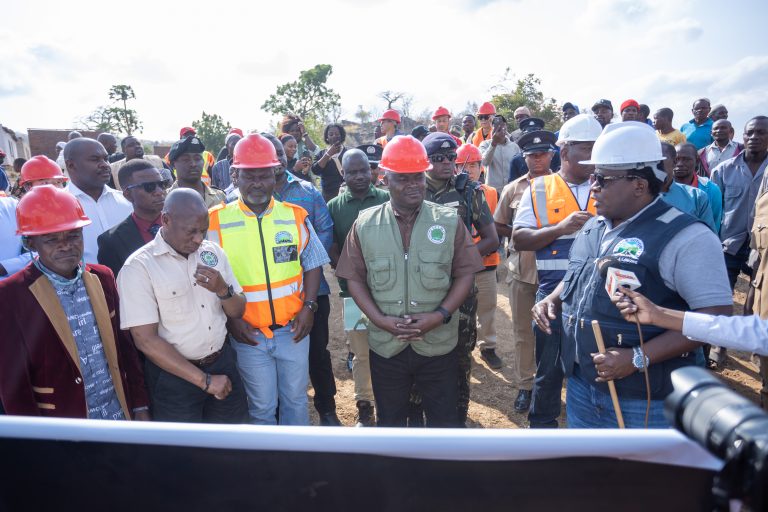
For generations, families in Bwanali, Nsolo, Namkumba, Makwinja and surrounding villages in Dedza District have walked long distances in search of clean water. Today, that story has changed. With the commissioning of the Bwanali Solar-Powered Water Supply System, over 350 households now have safe, reliable water right within their communities.
At the launch, the Minister of Local Government and Rural Development, Dr. Ben Malunga Phiri, reminded the gathering that water is more than a basic need; it is the foundation of health, productivity, and dignity.
“When people spend hours searching for water, they lose valuable time that could be used for farming, learning, or earning a living. This project restores that time and protects families from waterborne diseases,” he said.
Funded under the Regional Climate Resilience Project (RCRP-2) with support from the World Bank, the system is designed to withstand climate shocks and serve communities for generations. It includes a 10,000-litre tank, a 3-kilometre pipeline, and six water kiosks strategically placed across the villages.
For the communities, the change is already visible.
Berita Ignancio of Makwinja Village, the new water system has completely transformed daily life.
“We were poor in terms of access to clean and safe water. Sometimes we spent almost three-quarters of an hour just waiting to draw water from the borehole because everyone depended on it. We hardly had time to complete household chores.
“Now we can collect water close to our homes. We have enough time to care for our families, and we are planning to establish backyard gardens so that we can improve household nutrition,” she explained.
Another member, William Papius, recalls the difficult years before the project.
“Women left home as early as three in the morning to fetch water. Worse still, some were attacked while others drowned while trying to access water. Those challenges are now a thing of the past,” he said.
Michael Linzi, Secretary of the local Water Supply Committee, shared that cases of diarrheal diseases have dropped since the system began operating.
“To ensure sustainability, each household contributes K500 for maintenance, and community by-laws are being developed to protect the infrastructure from vandalism,” he said.
Village Head Nsolo I expressed gratitude to the government and partners.
“I am pledging that the community will safeguard the facility for future generations,” he added.
RCRP-2 Program Coordinator Adwell Zembele described the project as “a huge transformation,” noting that families no longer rely on unsafe sources or overcrowded boreholes.
Averred Zembele: “The Bwanali Solar-Powered Water Supply System is more than infrastructure. It is a symbol of resilience, unity, and progress for Dedza.”
For the communities, the commissioning was not just about pipes and tanks. It was about hope. Children can now attend school without worrying about fetching water, women can spend more time on income-generating activities, and families can drink safely without fear of disease.
RCRP Communications:
RELATED POSTS
-
𝐂𝐡𝐢𝐧𝐠𝐨-𝐌𝐚𝐤𝐚𝐧𝐣𝐢𝐫𝐚 𝐑𝐨𝐚𝐝 𝐭𝐨 𝐆𝐞𝐭 𝟗 𝐍𝐞𝐰 𝐁𝐫𝐢𝐝𝐠𝐞𝐬 𝐛𝐲 𝟐𝟎𝟐𝟖
The Government of Malawi has launched the construction of nine…
-
Project rehabilitates school block in Karonga.
The K82 million RCRP-2 project restored a wind-damaged classroom block…